
Underground Water Storage for Melbourne Properties: What a 20,000 Litre Tank Install Actually Involves
A 20,000 litre water tank is a big piece of kit. Sitting on the surface, it would dominate a backyard or eat into usable space on a commercial site. Put it underground, and the same capacity disappears beneath your feet. Once the backfill goes over the top and the ground is reinstated, you would never know it was there.
That is the quiet appeal of underground water storage, and it is a job we are being asked about more often across Melbourne. Homeowners investing in established gardens want a reserve to draw on through summer. Commercial and civil sites need storage that does not compromise the surface area they have allocated to other uses. In both cases, going below ground solves the space problem. What it does not do is make the job simpler. If anything, an underground tank asks more of the groundwork than a surface one ever would.
Here is what actually goes into installing a tank like this, and why the part you cannot see is the part that matters most.
Why put a water tank underground at all
The obvious answer is space, and for a lot of properties that is the whole story. A tank holding 20,000 litres is not small. Above ground it needs a footprint, clearance around it, and usually a screen or some landscaping to stop it becoming the first thing you see. On a tight inner-Melbourne block, or a site where every square metre is already spoken for, that is space most people would rather use for something else.
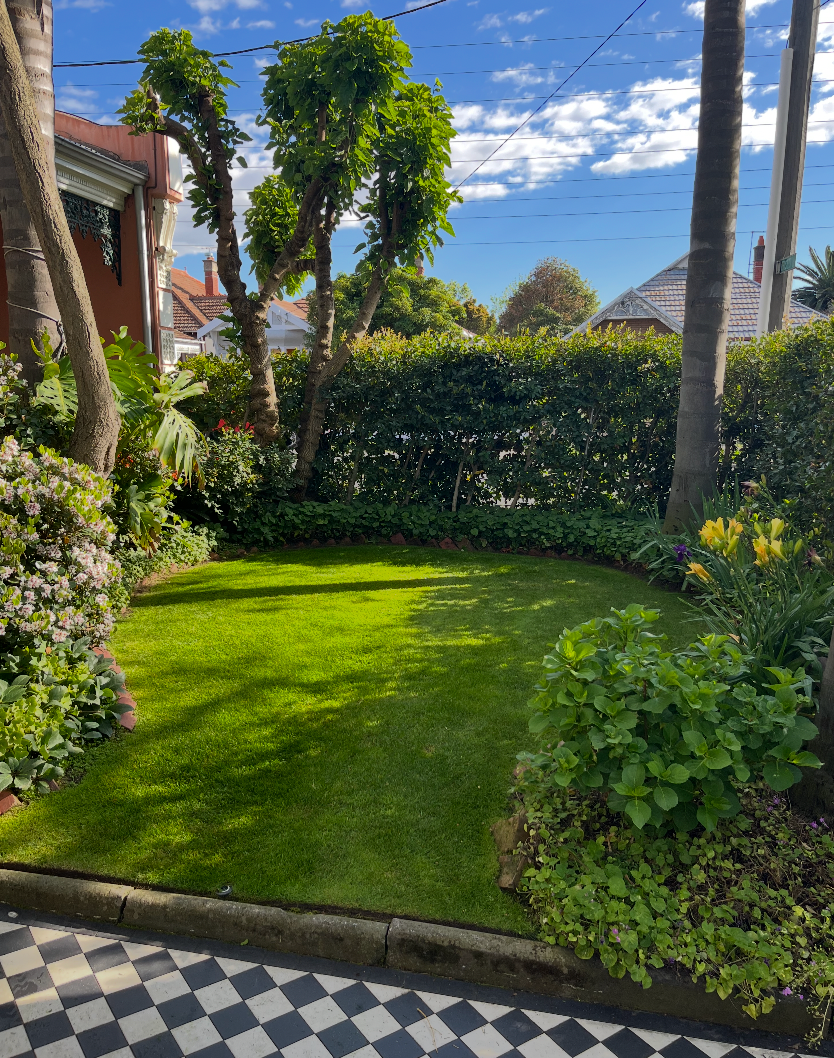
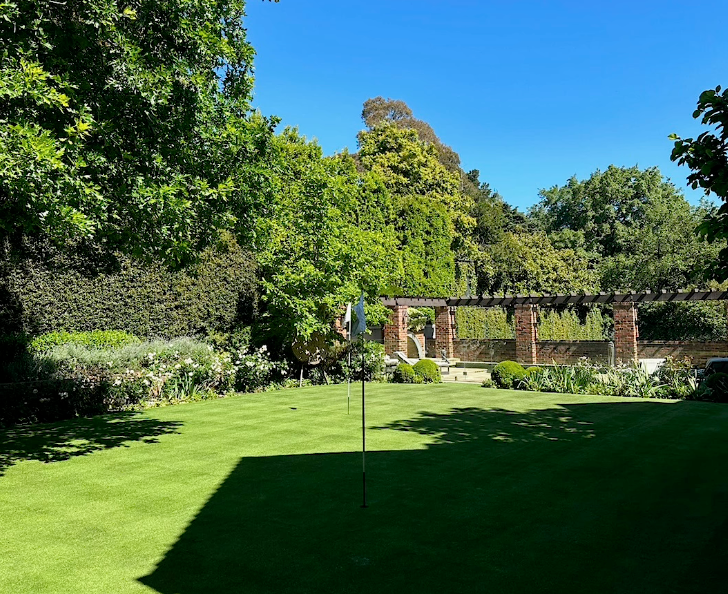
Underground storage removes that trade-off. The capacity is identical. The difference is that it sits beneath a lawn, a driveway, a garden bed, or a paved area, doing its job out of sight. For residential properties where the garden is the point, that means no bulky tank interrupting the design. For commercial and civil sites, it means surface area stays available for buildings, hardstand, parking, or landscaping.
There is a second reason that matters in Melbourne specifically. Water security has become a genuine consideration rather than an afterthought. A buried reserve of this size gives a property a real buffer, whether that water is captured rainfall feeding an irrigation system or a held reserve for a larger landscape. Through a long, dry Australian summer, 20,000 litres goes a long way.
What 20,000 litres actually gets you
It helps to put the number in context. Twenty thousand litres is enough to make a meaningful difference to how a property manages water, not just a token gesture. For an established garden running an irrigation system, that volume can carry the watering load through stretches of dry weather without leaning on mains supply. For a larger landscape, or a commercial site with planting to maintain, it provides a reserve that buys flexibility when restrictions tighten or rainfall does not arrive on schedule.
Sizing a tank is its own decision, and it depends on what the water is feeding, how much roof or catchment area is available to fill it, and what the property is trying to achieve. A tank that is too small empties before it is useful. One that is too large for its catchment never fills. Twenty thousand litres tends to suit properties with a real garden or landscape to support and the catchment to keep it topped up, which is exactly the kind of work that sits across both garden and civil sites.
The groundwork is the real job
This is the part people underestimate. The tank is the visible product, but the install lives or dies on what happens in the ground before the tank ever arrives.
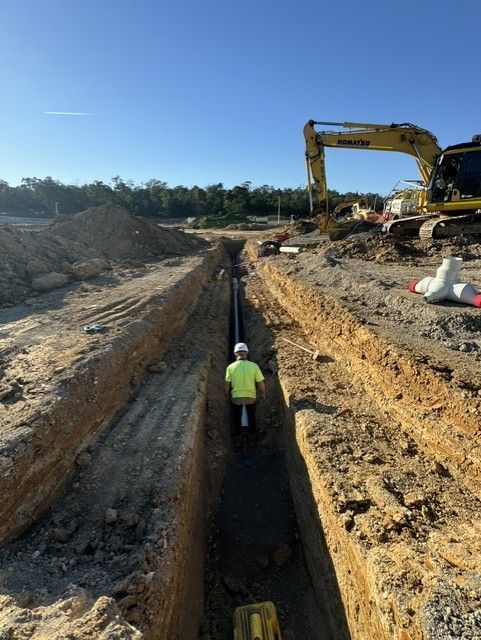
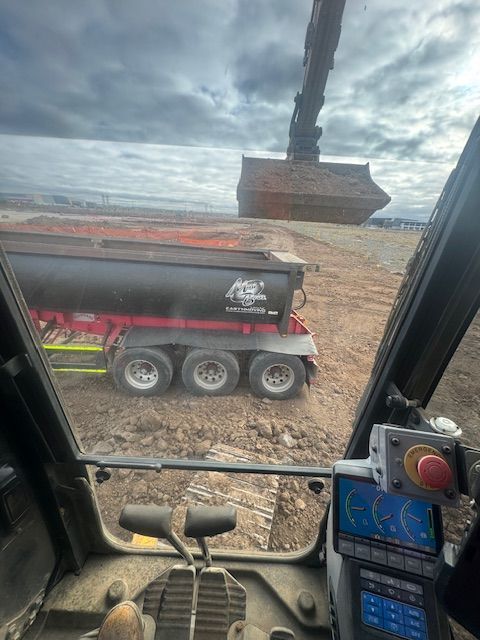
It starts with the excavation. A pit for a tank this size has to be cut accurately, shaped to suit the tank, and dug to the right depth. Get the dimensions wrong and you are either fighting to fit the tank or backfilling a gap that should never have been there. This is where accurate machine work earns its keep. A clean, correctly shaped excavation sets up everything that follows.
Then comes the base. An underground tank needs to sit on a properly prepared and compacted foundation. The base has to carry the weight of a full tank, stay stable over time, and give the tank an even surface to rest on. Skip the preparation, or compact it poorly, and the tank can settle unevenly once it is full and loaded. That is the kind of problem that does not show up on install day. It shows up years later, and by then it is expensive to fix.
With the base right, the tank is lowered into position and levelled. Levelling is not a nicety. A tank sitting off level puts uneven load on its structure and affects how it performs over its life. Only once the tank is sitting true and stable do connections get made and backfill begin. The backfill itself has to be done carefully and evenly around the tank so it is supported on all sides rather than pushed out of position.
None of this is visible in the finished job. That is rather the point. A good underground tank install is one nobody ever thinks about again.
Where civil earthworks meets water systems
A job like this sits in an interesting spot. It is not purely earthworks, and it is not purely a water or irrigation job. It needs both, on the same site, working together.
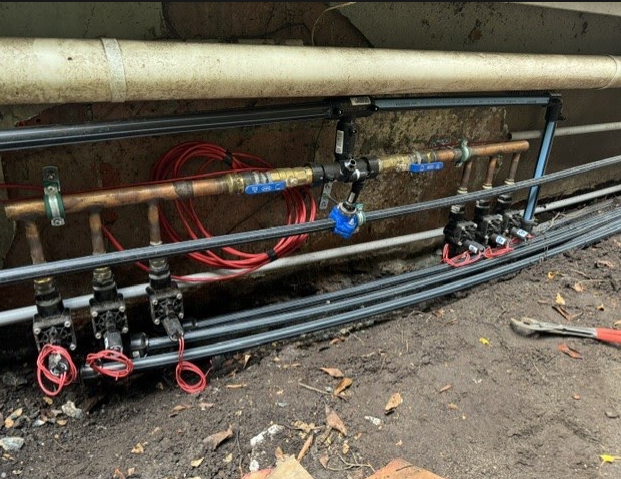
The excavation, the base preparation, the levelling, and the backfill are civil earthmoving and earthworks work. That is the discipline that makes sure the hole is right, the foundation is sound, and the tank is set properly. The other half is understanding what the tank is for and how it connects into the wider system, which is where irrigation and water systems experience comes in. A tank is only as useful as the system drawing from it, so the storage and the supply need to be planned as one.
Bringing both capabilities to a single site is not something every operator can do. Plenty of landscaping outfits handle planting and maintenance. Plenty of civil contractors handle bulk earthworks. The work that combines accurate excavation with an understanding of how water moves around a property is a narrower field, and it is the kind of integrated job CHS has built decades of experience around.
Underground storage and Melbourne's climate
Melbourne's weather makes a strong case for on-site water storage. The city swings between wet stretches that fill catchments quickly and long dry runs that put established gardens under pressure. A property that captures water when it is plentiful and holds it for when it is not is far better placed than one relying on mains supply and hoping for rain.
For anyone investing in a serious garden, an irrigation system, or a water-wise landscape, storage is the piece that ties it together. It supports more sustainable irrigation, reduces reliance on town water, and helps a property stay green through the months when it matters most. Pairing storage with a well-designed irrigation setup means the water captured in winter is still working for the garden in February.
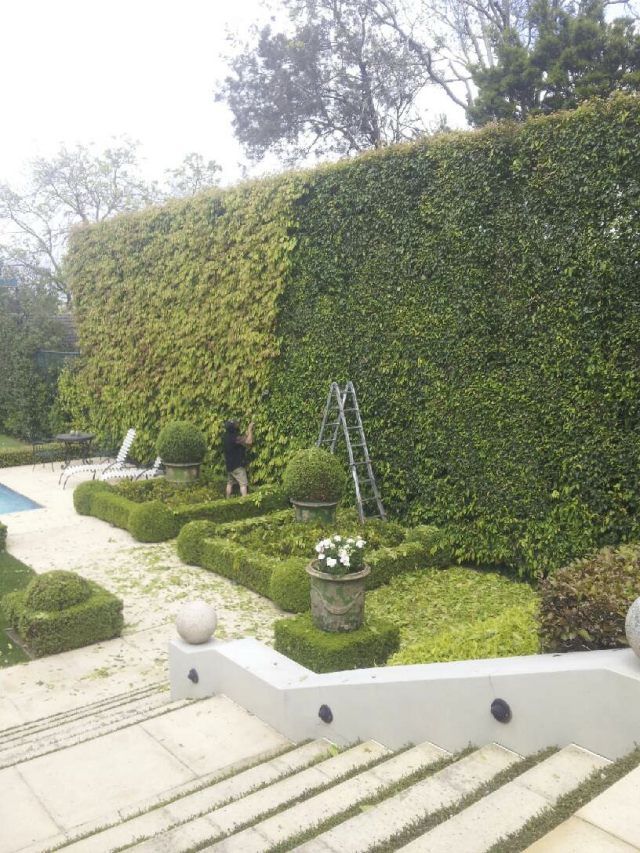
This is the same thinking behind a lot of the landscape construction and garden work happening across Melbourne right now. Water is no longer an afterthought bolted on at the end. It is being designed in from the start, and underground storage is often the most practical way to hold a meaningful reserve without giving up the space above it.
Residential and commercial both benefit
On a residential property, the driver is usually the garden. An owner who has put money and thought into established planting wants the security of a reserve and the convenience of irrigation that is not at the mercy of restrictions. Underground storage delivers that without the tank becoming a feature nobody asked for.
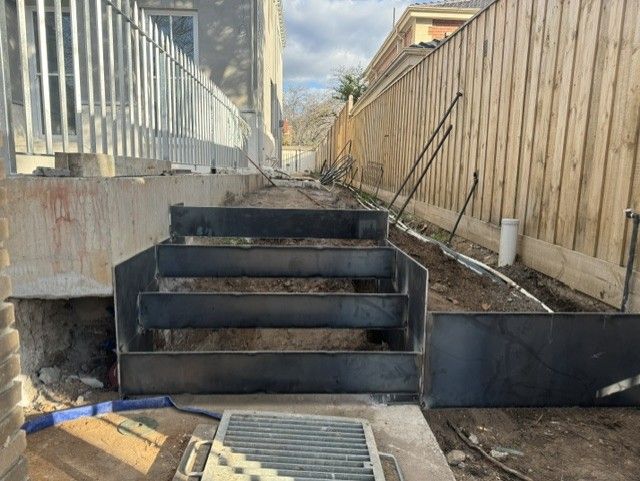
On commercial, civil, and growth corridor sites, the considerations are different but the logic is the same. Storage might be there for landscape irrigation, for site water management, or as part of a broader civil works package. The surface stays free for its intended use, and the storage does its job underneath. These are the kinds of larger sites where the earthworks side of the job is substantial in its own right, and where having one team handle both the excavation and the water side keeps the project moving.
A few things worth thinking about before you install
If underground water storage is on your radar, a handful of questions are worth working through early.
What is the water for? Irrigation, general garden use, a held reserve, or site water management. The answer shapes the size and how it connects in.
How much catchment do you have to fill it? A tank only earns its place if it actually fills. Roof area and other catchment determine whether 20,000 litres is the right number or whether you want more or less.
What is the access like? Getting machinery in to dig a pit this size, and getting the tank itself onto the property and into position, needs space and planning. On a tight site this is part of the job that has to be sorted before anything starts.
What is going over the top? A tank under a lawn is a different proposition to one under a driveway or paved area that will carry load. That affects how the install is detailed.
Working through these up front is the difference between a tank that quietly does its job for decades and one that becomes a headache. Most of it comes down to planning and getting the groundwork right, which is exactly where experience pays off.
The takeaway
An underground 20,000 litre water tank is one of those jobs where the finished result is deliberately invisible. The value is not in the tank you can point to. It is in the capacity sitting quietly beneath the surface, the space you got to keep above it, and the groundwork that means you will not have to think about it again.
For Melbourne properties weighing up water storage, whether for an established garden, a new landscape, or a commercial site, going underground is often the smartest way to hold a serious reserve. The catch is that it asks for proper earthworks and a real understanding of how the water fits into the bigger picture. Done well, you get all the capacity and none of the compromise.
If you are thinking about water storage for your property or project, get in touch with CHS and we can talk through what is involved. You can also see more of our earthworks and landscape projects to get a sense of the work.