Bulk Earthworks in Melbourne: Why Haulage Makes or Breaks the Job
Most people picture the excavator when they think of earthworks. The big arm, the bucket, the dirt coming out of the ground. What they rarely think about is where all that dirt goes, and that part is just as important. On a bulk earthworks job, the machine that moves the spoil is often the one that decides whether the site runs to schedule or sits there waiting.
That machine, on a lot of our sites, is an articulated dump truck. Ours carries up to 30 tonnes a load and is built to work in most ground conditions Melbourne can throw at it. It is not the flashy part of the operation, but it is the part that keeps everything else moving.
What an articulated dump truck actually does
A dump truck on an earthworks site has one job: take material from where it is being dug and move it to where it needs to go. That might be spoil heading off to a stockpile, fill being shifted across a site to build up a level, or material being loaded out and carted away entirely.
The "articulated" part is the bit worth understanding. A rigid truck is one solid frame from cab to tray. An articulated truck bends in the middle, at a pivot point behind the cab. That single design feature changes what the machine can do. It gives a much tighter turning circle, so it can work in confined sites and around obstacles. More importantly, it lets the truck keep traction and stability on soft, wet or uneven ground, the kind of terrain that bogs down a rigid truck or a road-going tipper in minutes.
For a city like Melbourne, that matters more than it might sound. Plenty of sites here involve heavy clay, recently cut ground, or conditions that turn greasy after rain. A truck that keeps working through all of that is worth its weight.
Why ground conditions decide the machine
There is no single right machine for earthworks. The right machine depends on the ground, the access, and the volume of material being moved.
Melbourne's growth corridors in the west and north are a good example. These are large, open sites being prepared for housing and infrastructure, often with thousands of cubic metres of material to shift. The ground can be dense clay that holds water, and in the wetter months it does not dry out quickly. On a site like that, an articulated truck earns its place because it keeps hauling when conditions are against it.
Inner-suburb work is a different problem. Tighter access, less room to manoeuvre, neighbours close by. Here the value of articulation is the turning circle and the ability to work cleanly in a confined space rather than raw volume.
Matching the machine to the conditions is one of the quiet skills of earthmoving and transport work. Bring the wrong gear and you either damage the ground, slow the job down, or both.
The earthworks cycle: how it fits together
A bulk earthworks operation runs as a cycle, and every machine in it depends on the others.
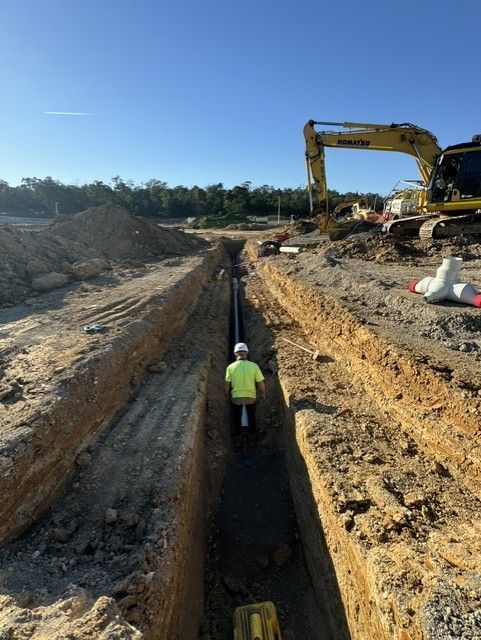
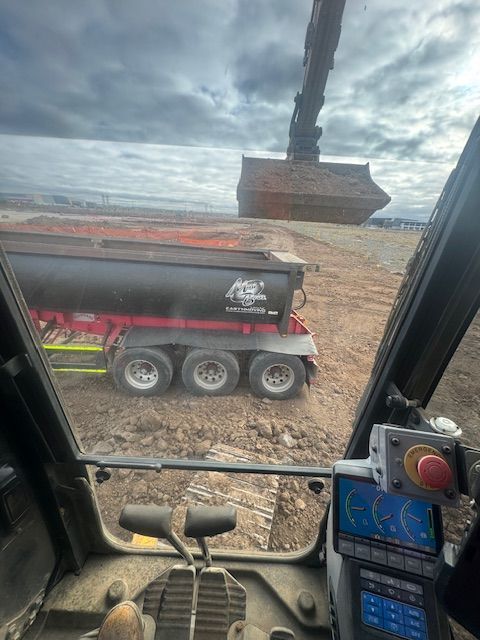
It usually starts with the excavator. On our larger jobs that is a 22-tonne machine, often running GPS machine control so the operator can cut to the design levels straight off a digital model, accurate to millimetres without endless string lines and survey checks. The excavator loads the dump truck. The truck hauls the material to where it is needed, tips it, and comes back for the next load. A dozer then spreads and trims, and the surface is compacted to spec.
The truck sits right in the middle of that loop. If the haulage cannot keep up, the excavator ends up sitting idle waiting to load, and an idle excavator on a bulk job is money standing still. Get the haulage capacity right and the whole cycle flows. This is why we think about the truck as much as the digging gear. A site cut is only as fast as its slowest link.
When we formed a house pad in one of the growth corridor suburbs, the job involved moving roughly 1,500 cubic metres of dense soil. That volume only gets shifted on time if the loading and the hauling are matched to each other. The excavator cuts, the truck moves it, the dozer trims, and the levels come out accurate for whoever builds next.
The part of landscaping nobody sees
Earthworks is the foundation that everything else is built on, and most of it disappears the moment the job is finished.
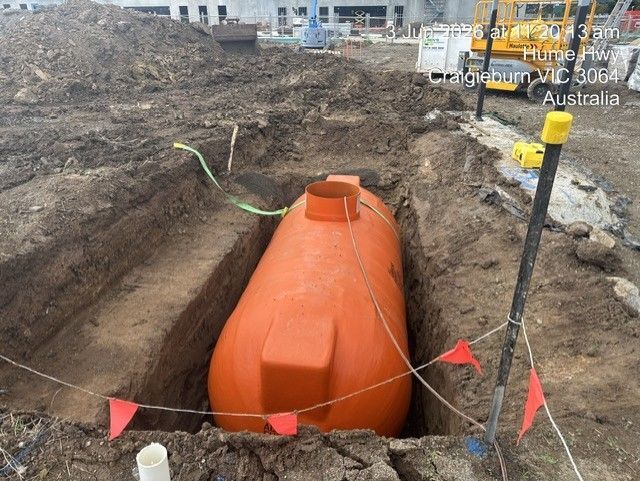
Before a single plant goes in or a paver gets laid, the ground has to be right. Levels set correctly. Drainage considered from the start. Fall directed where it should go. Underground services like sewer and stormwater installed at depth. Get the groundwork wrong and you pay for it later, often by digging up finished surfaces to fix what should have been done first.
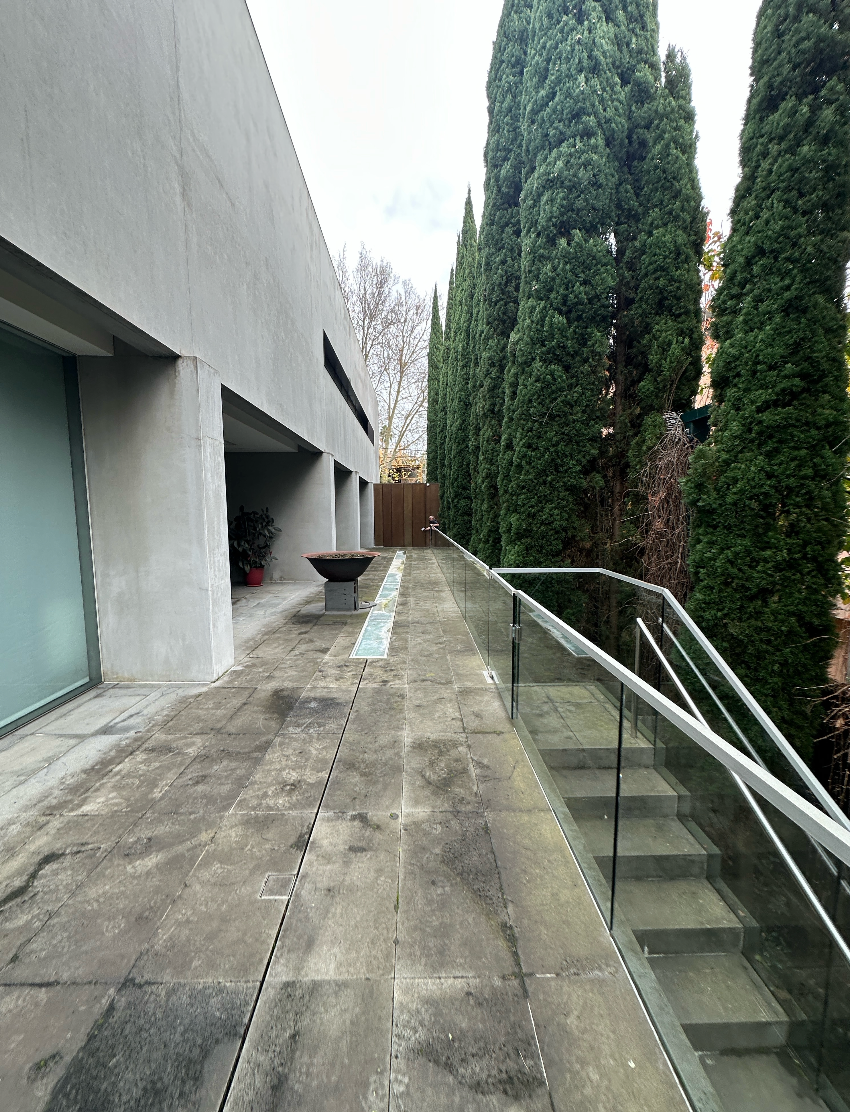
This is where bulk earthworks connects to the rest of a project. The same site preparation that starts with an excavator and a dump truck ends, eventually, as a finished landscape construction job: paving, planting, turf, the visible result. The two are not separate trades happening to share a site. They are the start and end of one continuous process, and the quality of the finish depends heavily on how well the groundwork was done.
It is the reason we treat earthworks as horticulture's foundation rather than a separate business. The same crew that understands what a garden needs to thrive understands why the levels and drainage have to be right from day one.
Why experience shows up in the boring parts
Anyone can hire a machine. The difference is in the decisions that get made before and during the work.
Knowing which truck suits the ground. Reading how a site will behave after rain. Sequencing the cut so the haul routes stay workable instead of churning to mud halfway through. Setting levels with drainage already in mind so the next trade is not left with a problem. None of that is glamorous, and none of it shows up in the finished photo, but it is what separates a site that runs smoothly from one that bogs down and blows out.
CHS has been doing civil earthworks and site preparation across Melbourne since 1995. Over that time the work has spanned residential house pads, schools, wetlands restoration, drainage and sewer installation, and large growth corridor developments. The common thread is not the size of the job. It is getting the unseen part right so everything built on top of it lasts. You can see a range of that work on our projects page.
Frequently asked questions
What is an articulated dump truck used for? An articulated dump truck moves large volumes of soil, rock and fill around an earthworks site. Its bending frame gives it a tight turning circle and strong traction on soft or uneven ground, which makes it well suited to bulk excavation, site cuts and material haulage in difficult conditions.
How much can a 30 tonne dump truck carry? A truck in this class carries up to around 30 tonnes of material per load. The exact figure depends on the material being moved, since dense, wet soil weighs more per cubic metre than dry, loose fill.
What is the difference between an articulated and a rigid dump truck? A rigid dump truck has one solid frame, while an articulated truck pivots in the middle behind the cab. The articulation gives a tighter turning circle and far better performance on soft, wet or uneven ground, which is why articulated trucks are common on civil earthworks sites.
Do you handle earthworks across all of Melbourne? Yes. CHS carries out bulk earthworks and site preparation across Melbourne, including the western and northern growth corridors and inner suburbs. The right machine for the job depends on the access and ground conditions at each site.
Does earthworks need to happen before landscaping? In most cases, yes. Levels, drainage and any underground services need to be set correctly before paving, turf or planting goes in. Getting the groundwork right first avoids costly rework once the visible surfaces are finished.