
The Garden Areas Most Melbourne Maintenance Crews Skip
Every property has a front garden that gets all the attention. It's what visitors see first, what photographs well, and what most maintenance schedules are built around. Then there's everything else. The side access path. The strip running along a boundary wall. The laneway nobody really walks down except to take the bins out.
These spaces don't get much thought, and honestly, a lot of maintenance crews skip them entirely unless someone specifically asks. But they matter more than people realise, both for how a property presents and for the practical job of keeping hedges, screening and paths from becoming a problem down the track.
A Job That Wasn't the Showpiece Garden
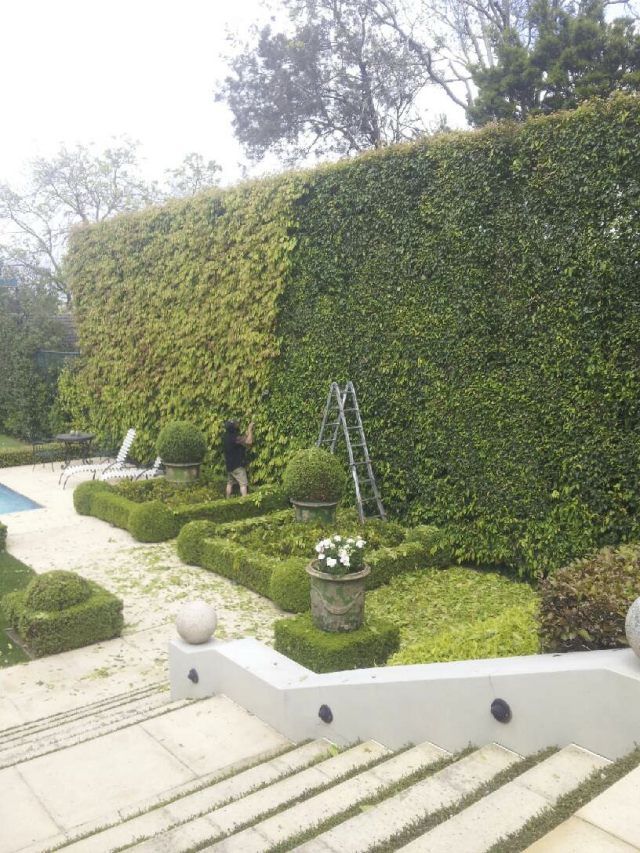
We were recently on site for exactly this kind of work. Not the front garden, not a rooftop terrace, just a side laneway running between a building wall and a boundary fence. A row of established conifers had grown up tight against the path, and a climbing hedge along the adjoining wall had spread further than it should have, narrowing the walkway and starting to creep over the edge of the paving.
On paper it's a minor job. In practice, it's the kind of space that quietly affects how the whole property feels. A narrow, overgrown laneway makes a property feel neglected even if the front garden is immaculate. Widen it back out, get the hedge line clean and the conifers back to their proper shape, and the same space reads as cared for, not as an afterthought.
Why These Spaces Get Missed
There are a few reasons boundary strips and side access areas fall through the cracks:
They're out of sight. If a garden maintenance visit is scheduled around what's visible from the street or the main entertaining areas, anything tucked down the side of the house just doesn't make the list.
They grow more slowly, until they don't. A conifer or climbing hedge in a narrower, shadier laneway often grows at a different rate to the same plant out in an open, sunny front garden. That inconsistency means these areas can go unnoticed for longer, right up until growth suddenly becomes a real problem.
They're assumed to be low priority. Nobody entertains guests in a side laneway, so it's easy to assume it doesn't matter as much. But narrow access paths get used constantly, for bins, deliveries, tradespeople, and general day to day movement around a property. An overgrown one is a genuine inconvenience, not just a cosmetic issue.
What Full-Property Maintenance Actually Looks Like
The difference between a maintenance service that covers the whole property and one that only covers the obvious parts usually comes down to how the job is scoped from the start. A few things we build into how we approach it:
Walking the full boundary, not just the beds. Every visit should account for hedging and screening along fence lines and side access, not only the garden beds that are easy to see.
Matching the schedule to the space. A boundary hedge in a narrow laneway might need a different trimming rhythm to the same species growing in full sun out front. Treating every hedge on a property identically means some areas get over-serviced while others are neglected.
Keeping access paths genuinely usable. This is about function as much as appearance. A side path that's wide enough and clear of overhanging growth is safer and more practical, not just tidier.
Treating structural planting as structural, wherever it is. Conifers and clipped hedges do a lot of quiet work holding a garden's shape and privacy together. Whether that planting is in the front garden or along a laneway, it deserves the same standard of care, because a scruffy boundary undercuts the presentation of everything else on the property.
The Bigger Picture
This isn't really about one laneway. It's about what a maintenance service is actually responsible for. A property is judged as a whole, and the parts that get overlooked have a way of dragging down the overall impression even when the visible areas are immaculate. A buyer walking a driveway, a visitor cutting through a side path, a neighbour looking over a boundary fence, all of these are forming an impression of the property that has nothing to do with how good the front garden looks.
Consistent, whole-property garden maintenance means every corner gets the same standard of attention, not just the areas that happen to be visible from the street. It's a small shift in approach, but it's the difference between a property that looks cared for from every angle and one that only looks that way from the front.
Frequently Asked Questions
Should boundary hedges and side access areas be included in regular garden maintenance?
Yes. These areas are just as much a part of a property's presentation and function as the front garden, and skipping them tends to mean bigger, more disruptive work later when growth eventually has to be addressed.
Why do laneways and side paths get overgrown faster than expected?
Narrower, shadier spaces often have different growing conditions to open garden beds, which means plant behaviour can be inconsistent and easy to underestimate if the area isn't checked regularly.
Does overgrown boundary hedging affect anything other than appearance?
It can. Overgrown hedges and conifers along a laneway can narrow usable path width, block light, and make everyday access for bins, deliveries or tradespeople more difficult, not just look untidy.
Can these areas be added to an existing maintenance schedule?
Yes, boundary strips and side access areas can be scoped into an existing garden maintenance plan so the whole property is covered on a consistent schedule rather than being handled as a separate, ad hoc job.