
When to Prune Roses in Australia: A Melbourne Guide
The main time to prune roses in Australia is winter, while the plants are dormant. In Melbourne that means July, stretching into early August in colder, frost-prone suburbs.
That covers the repeat-flowering bush roses most gardens are full of. It doesn't cover every rose. Once-flowering roses and many ramblers should be pruned after they flower, not in winter. Cutting them in July removes the wood that would have carried this year's blooms.
Most guides stop at "prune in winter" and a state-by-state calendar. The harder questions are which roses break the rule, how hard to cut, and what to do when it's already spring and you haven't started. Those are the ones we answer below.
When to prune roses in Melbourne
Melbourne's winters are mild enough that roses slow right down without being hit by the hard, repeated frosts of inland Victoria. That gives a comfortable pruning window:
- Inner and bayside suburbs: early to late July. The city's warmer microclimate means frost is rarely the limiting factor.
- Outer east, the Dandenong Ranges and other frost pockets: late July into early August. Pruning too early can push out soft shoots that a late frost then burns.
The logic is the same everywhere. You want to prune when the plant is dormant, and close enough to spring that the fresh cuts lead straight into new growth rather than sitting exposed through the coldest weeks.
Rose pruning is one part of a wider winter program. The same dormant window suits structural work on deciduous shrubs and fruit trees, which is why winter tends to be the busiest pruning season in garden maintenance in Melbourne.
When to prune by rose type
This is where generic advice goes wrong. Different roses flower on different wood, and that decides when to cut.
- Hybrid tea and floribunda bush roses: prune in July to early August. Cut hard, back by roughly a third to a half, keeping four to six strong canes.
- Standard (tree) roses: prune in July to early August. A moderate prune, shaping the head into a balanced, open dome.
- Repeat-flowering climbers: prune in July to early August. Keep the main canes and shorten the side shoots to two or three buds.
- Once-flowering roses and most ramblers: prune straight after flowering, in late spring to early summer. Remove some of the oldest canes, then tidy.
- Groundcover and miniature roses: prune in July to early August. A light trim to shape is usually enough.
Once-flowering roses are the ones people get wrong. Many heritage roses and ramblers bloom on stems grown the previous season. Cut them hard in winter and you get a healthy plant with very few flowers. Prune them after they flower instead, and let the new growth ripen over summer for next year's show.
How to prune a rose bush, step by step
For the repeat-flowering bush roses most Melbourne gardens have:
- Start with clean, sharp secateurs. A clean cut heals faster, while a crushed stem invites dieback. Keep a pruning saw handy for old, thick canes.
- Remove the dead, damaged and diseased wood first. Cut back to healthy growth, which shows green bark and a white centre.
- Take out spindly and crossing stems. Anything thinner than a pencil rarely flowers well. Stems rubbing against each other create wounds.
- Open up the centre. Aim for a vase shape with four to six evenly spaced strong canes. Good airflow through the middle is one of the best defences against black spot and mildew.
- Cut back the remaining canes. Make each cut about 5mm above an outward-facing bud, sloping away from it so water runs off.
- Clean up underneath. Rake out old leaves and prunings rather than leaving them in the bed, since fungal spores overwinter in fallen foliage.
- Feed and mulch as growth starts. Once new shoots appear in early spring, a rose fertiliser and a fresh layer of mulch set the plant up for the first flush.
Pruning roses in a formal garden
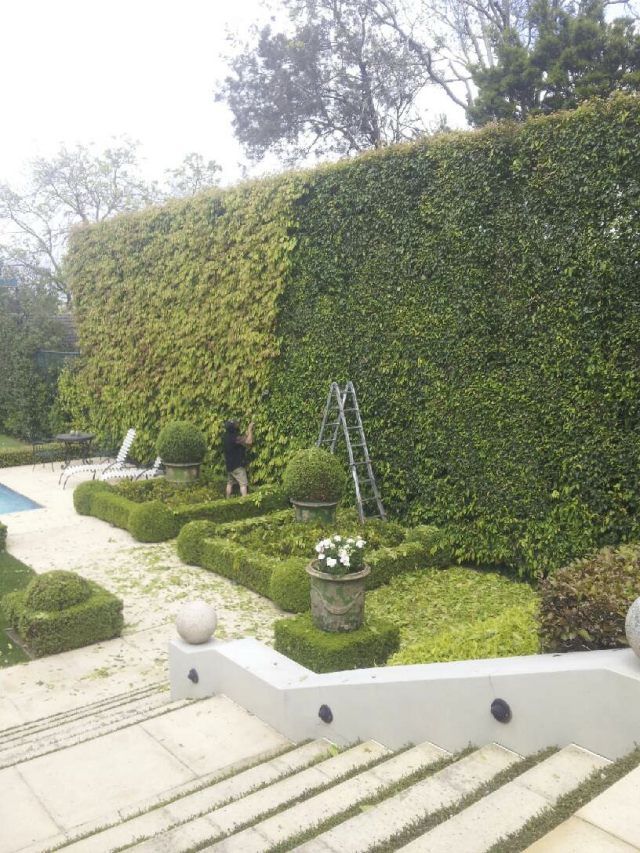
In a relaxed cottage bed, an uneven rose is fine. In a formal garden it isn't. A row of standards flanking a path, or a clipped rose border inside box hedging, only works if every plant is shaped to match its neighbours.
That changes how you prune. It isn't just about each plant's health. Heights need to line up, the heads on standards need to be the same size, and the pruning needs to allow for how each variety will fill out over spring so the border peaks evenly. This is closer to hedge work than to casual rose care, and the same attention to line that goes into hedge trimming and pruning applies here.
How we approach it
CHS looks after established formal gardens across Melbourne's inner suburbs, including gardens featured in Paul Bangay's books. On those properties the winter rose prune is scheduled as its own job, not squeezed in alongside general maintenance. [CONFIRM WITH ALISTAIR: typical timing and approach, e.g. "we generally work through inner-suburb rose gardens in the first half of July and leave frost-prone properties until later," plus one real detail from a rose-heavy garden you maintain.]
It's spring and you haven't pruned. What now?
This is the question most guides skip, and it's the one people are searching for from September onwards.
If your roses are already in full leaf with buds forming, don't do a full winter-style hard prune now. A healthy rose will survive it, but you'll cut off the first flush of flowers and push the plant into producing a second set of growth in warming weather.
Instead:
- remove dead, diseased and crossing wood, which is worth doing at any time of year
- take out the weakest spindly growth to open up the centre
- lightly shorten any canes that are clearly too tall or out of shape
- leave the heavy restructure until next July
Treat the rest of the season as recovery, and put the proper prune in the calendar for winter.
Summer pruning and deadheading
Winter isn't the only time roses get cut. Through the flowering season, remove spent blooms back to the first strong leaf. This deadheading encourages the plant to keep flowering instead of putting energy into hips.
Many Melbourne gardeners also give repeat-flowering roses a light summer prune in late January or early February, taking the bush back by about a third to set up a strong autumn flush. It's lighter than the winter prune and optional, but in a garden where roses carry the display into autumn, it's worth doing.
Avoid cutting heavily during a run of very hot days. Fresh growth exposed to 40 degree heat scorches easily, the same reason hot spells are a poor time for trimming hedges in Melbourne.
Common rose pruning mistakes
Pruning too timidly. A light trim on a hybrid tea in winter leaves a tall, woody, top-heavy bush with weaker flowers. Repeat-flowering bush roses respond well to a firm cut.
Pruning once-flowering roses in winter. This is the most common reason a healthy climber or heritage rose stops flowering.
Leaving prunings and leaves in the bed. Disease carries over from one season to the next in the litter under the bush.
Cutting to an inward-facing bud. The new shoot grows into the centre, crowding the plant and cutting off airflow.
Pruning too early in a frost pocket. New shoots that appear in late July can be burnt back by an August frost.
Get your roses on the right rhythm
Roses reward a proper calendar: a firm prune each winter, deadheading through the season, and a light summer cut if you want a strong autumn display. Miss the timing and they'll still grow, but the flowering, shape and health all slip.
If you'd rather have your roses pruned properly each winter, alongside the rest of the garden, get in touch for a quote and we'll take a look at what your garden needs.
Frequently Asked Questions
When is the best time to prune roses in Melbourne?
July is the best time for most roses in Melbourne, while the plants are dormant. In colder outer-east suburbs and frost pockets, late July to early August is safer, so new shoots aren't burnt by a late frost.
Can I prune roses in spring?
You can do a light tidy in spring, removing dead, diseased and crossing wood. A full hard prune once the rose is in leaf will cost you the first flush of flowers, so save the heavy prune for the following winter.
Should all roses be pruned in winter?
No. Repeat-flowering bush roses, standards and repeat-flowering climbers are pruned in winter. Once-flowering roses and most ramblers flower on the previous season's wood, so prune them straight after flowering instead.
How much should I cut off my roses?
For hybrid tea and floribunda bush roses, cut back by roughly a third to a half. Keep four to six strong canes and make each cut just above an outward-facing bud. Climbers, standards and groundcover roses need a lighter, more shaping approach.
Do roses need a summer prune?
It's optional. Regular deadheading keeps roses flowering. In Melbourne, a light prune in late January or early February, taking the bush back by about a third, encourages a stronger autumn flush.