Turf Underlay: Why the Base Matters Most Under a New Lawn

By
Alistair Bethke, Founder
30+ years in Melbourne horticulture and civil works
Key takeaways
- Turf underlay is the layer of soil, usually a sandy loam, that is spread and levelled over the existing ground before new turf goes down, and it becomes the root zone the lawn relies on for years.
- As a general guide, turf growers recommend around 100mm of turf underlay as a minimum, with more needed where the ground underneath is heavy clay, compacted or full of builder's fill.
- Preparing ground for turf properly means clearing old grass and weeds, dealing with drainage and compaction, spreading the underlay and setting the levels before a single roll is laid.
- A lawn laid on a poor base usually shows it within a season or two, through bumps, soggy patches, thin growth and spots that dry out first, and those problems are hard to fix without lifting the turf.
Most people judge a new lawn by the grass. The grass is actually the easy part. What decides whether a lawn stays flat, drains properly and holds its colour through a Melbourne summer is the turf underlay underneath it, and the ground preparation that goes in before the turf ever arrives.
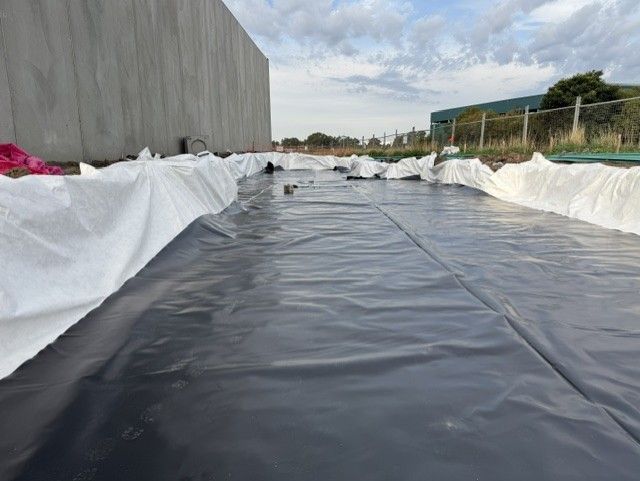
The photo above is a backyard in Malvern at the halfway point: old surface cleared, underlay spread and levelled, ready for turf. It doesn't look like much. But that bare, even ground is the reason the finished lawn sits flat and green right up to the hedging. Here is what turf underlay is, how much you need, and why it matters more than which grass you pick.
What is turf underlay?
Turf underlay is a soil mix spread over the existing ground to give new turf a consistent, free-draining layer to root into. Rolled turf arrives with only a thin slice of soil attached. Once it is down, its new roots grow straight into whatever sits beneath it, so that layer effectively becomes the lawn's root zone.
It also does a practical job on the surface. Underlay is what gets raked, levelled and shaped so the finished lawn sits at the right height against paths, edges and garden beds, and falls the right way when it rains.
Why sandy loam is the usual choice
Most turf underlay soil sold by landscape suppliers is a sandy loam, commonly around 80 percent sand and 20 percent loam. The sand keeps it free draining and stops it packing down hard. The loam holds enough moisture and nutrients for young roots to establish. Some blends add compost or other organic matter to help with water holding in the early weeks.
What you want to avoid is ordinary garden soil or leftover builder's fill. Both tend to compact and drain poorly, which is exactly what a new lawn doesn't need.
Why the base matters more than the grass
It's tempting to spend all the decision-making on the turf variety. Variety matters, but every variety performs badly on a poor base. The base controls four things the grass can't fix on its own:
- Drainage. Water needs to move down through the root zone rather than sit on the surface. A lawn on poorly drained ground stays soggy after rain and becomes prone to disease and thinning.
- Root depth. Roots go where the soil lets them. A loose, consistent underlay encourages deeper roots, and deeper roots are what get a lawn through a dry spell.
- Levels. Every bump and hollow in the base shows through the turf. Mowers scalp the high spots and water pools in the low ones.
- Wear. A lawn that is used, by kids, dogs or garden parties, needs a stable base that won't rut or sink.
Once the turf is down, almost all of that is locked in. You can top dress to smooth minor dips, which we cover in how to top dress a lawn, but a badly prepared base generally means lifting the turf and starting again.
How deep should turf underlay be?
The usual guidance from turf growers is around 100mm of underlay as a minimum. That gives new roots a decent depth of good soil to establish in before they reach whatever is underneath.
The right depth really depends on the ground you're starting with:
- Good existing soil. If the ground is already a reasonable loam, a thinner layer may be enough, mainly to fine tune the levels.
- Average residential ground. Around 100mm is the sensible starting point.
- Heavy clay, rubble or compacted fill. More depth, and often more preparation underneath, before any underlay goes in.
Working out how much you need
The maths is simple: area multiplied by depth. At 100mm deep, you need roughly one cubic metre of underlay for every 10 square metres of lawn. A 60 square metre backyard at 100mm is about six cubic metres. It's worth ordering a little extra, since underlay settles once it's firmed and you'll want some on hand for final levelling.
Preparing ground for turf, step by step
This is the general order of work for preparing soil for turf. Every site is different, but skipping any of these is where most lawn problems start.
- Clear the old surface. Remove existing grass, weeds and roots. Persistent running grasses left in the ground will come straight back up through new turf.
- Check what's underneath. Dig a few test holes. Clay, buried rubble, old paving bases and compacted fill all change what the site needs.
- Deal with compaction and drainage. Break up compacted ground so water and roots can move through it. On poorly drained sites, sort out drainage now, because it can't be done later without lifting the lawn.
- Spread the underlay. Bring the turf underlay soil in and spread it evenly to the planned depth.
- Set the levels and fall. Rake and screed the surface so it falls gently away from the house and toward any drainage points. Finish slightly below adjoining paths and edges to allow for the thickness of the turf, so the lawn sits flush once laid.
- Firm it up. Lightly roll or firm the underlay to remove soft spots, then re-check the levels. You want it firm, not packed hard.
- Lay and water promptly. Turf should go down as soon as it's delivered and be watered straight away. From there, establishment is all about water, which we cover in watering new turf in Melbourne.
Laying turf on clay soil in Melbourne
Plenty of Melbourne properties sit on heavy clay. Clay holds water well, which sounds like a good thing, but it drains slowly, sets hard when dry and stays wet for days after rain.
A common shortcut is to spread a thin layer of sandy loam straight over hard clay and lay the turf on top. The problem is that water can drain through the sandy layer quickly, then stall where it meets the clay, leaving the root zone waterlogged after rain and dry on top in summer. Roots tend to stay shallow in that thin band.
On clay sites, the preparation underneath does a lot of the work. That usually means breaking up the clay surface, improving drainage where water collects, and using enough underlay depth to give roots a proper zone to grow into. Gypsum is often used on clay soils to help improve their structure, although how much it helps depends on the clay itself.
Signs a lawn was laid on a poor base
If you've inherited a lawn that never seems to come good, the base is often the reason. The tell-tale signs:
- Bumps and hollows that the mower scalps or that hold puddles after rain.
- Soggy patches that stay wet for days, often thinning or developing disease.
- Dry spots that brown off first in hot weather, usually where the soil is shallow or compacted.
- Turf that lifts easily because the roots never went down into the soil below.
- Uneven colour across the lawn, tracking where the soil underneath changes.
Some of these can be improved with aeration, top dressing and better watering. If the problems run across most of the lawn, rebuilding the base is usually the longer-term fix.
How CHS approaches it
CHS builds turf panels based on golf course construction specifications. In practice that means the base gets as much attention as the grass on top: what's underneath is checked, drainage and levels are set properly, and the underlay goes in at a depth that suits the site rather than whatever is quickest. You can see more of how that works on our turf installation page.
The Malvern backyard in the photos is a good example. The first shot shows the prepared base, cleared and levelled through to the hedging and the shed. The second shows the same yard once the new lawn had knitted in and spring had arrived.
[CONFIRM WITH CHS: what was under the old surface, the underlay used and roughly how deep, the turf variety, whether irrigation went in, and roughly how long between the two photos.]
Once a lawn is established, keeping it that way is about mowing height, feeding and regular care, which is where our lawn care and mowing service comes in.
Get the base right first
A new lawn is only as good as the ground it's laid on. Choose the right turf underlay, put it in at a sensible depth, deal with drainage and levels before the turf arrives, and the lawn has every chance of staying flat, green and hard wearing for years. Skip the base and you'll be chasing the same problems season after season.
If you're planning a new lawn and want the groundwork done properly, get in touch and we'll take a look at what your site needs.
Frequently asked questions
What is turf underlay made of?
Most turf underlay is a sandy loam, commonly around 80 percent sand and 20 percent loam. The sand helps it drain and resist compaction, while the loam holds moisture and nutrients for new roots. Some blends add compost or other organic matter.
How deep should turf underlay be?
Around 100mm is the usual minimum recommended by turf growers. Sites with good existing soil may need less, mainly for levelling, while heavy clay, compacted ground or builder's fill generally need more depth and extra preparation underneath.
Can I lay turf straight onto existing soil?
Sometimes, if the existing soil is a good, free-draining loam with enough depth. Most residential ground isn't, especially around new builds or on clay, so a layer of turf underlay is usually needed for drainage, root depth and accurate levels.
Can you lay turf on clay soil?
Yes, but clay needs more preparation. Breaking up the clay surface, sorting out drainage and using enough underlay depth all help. A thin layer of sandy loam laid straight over hard clay can hold water where the two meet and keep roots shallow.
Should turf underlay be compacted before laying turf?
It should be firmed, not packed hard. A light roll removes soft spots so the lawn doesn't sink unevenly later, while leaving the soil open enough for water and roots to move through it. Check the levels again after firming.