The Best Time to Trim Hedges in Melbourne (and How Often to Do It)
The best time to trim hedges in Melbourne is late winter to early spring for a hard reshape, followed by lighter trims through the warmer months to hold that shape. Most evergreen hedges want two or three cuts a year, and Melbourne's mild climate means you can trim almost any time except through a run of 40 degree days. Beyond that, the honest answer comes down to the species you are cutting and how tall the hedge has grown.
That last point is where most advice stops short. Timing a box hedge at knee height is one thing. Keeping a four metre cypress screen crisp and even is another job entirely, and it is the reason professional hedge trimming and pruning on a tall hedge often has more to do with access than with the calendar. Here is how we think about timing, frequency, and the point at which a ladder stops being the right tool.
The best time to trim hedges, season by season
For most Melbourne gardens the year splits into one big cut and a run of smaller ones.
Late winter to early spring: the hard reshape
Late winter into early spring is the window for structural work. Most hedges are close to dormant, so cutting them causes the least stress, and trimming just before the spring flush drives back thicker, denser regrowth. This is the time to bring height down, correct uneven growth, thin out a hedge that has gone woody in the middle, and cut into any bare patches while you can still see the structure.
Spring and summer: light maintenance
Once growth takes off, switch to lighter, more frequent trims that hold the lines and stop the hedge going leggy. Through summer the goal is maintenance, not reshaping. The one thing to watch is heat. Cutting on a run of 35 to 40 degree days exposes fresh foliage that can scorch and brown off, so if a hedge genuinely needs a tidy in a hot spell, do it early in the morning and give it a water afterwards. Melbourne rarely holds that heat for long, which is why most of summer is still fair game.
Autumn: a light tidy before winter
Autumn suits a final tidy to carry the hedge through the cold months. Keep it light. A hard cut late in autumn can push out soft new growth that then gets knocked around by the first proper cold snap.
The useful thing to understand about Melbourne specifically is that you are not as locked into the dormant season as gardeners in colder, frostier regions. Our winters are mild enough that timing is driven more by heat spikes and by the individual species than by a strict "only when dormant" rule.
How often to trim hedges
Most evergreen hedges need two to three trims a year, fast growers a little more, and deciduous hedges roughly twice, once after each growth flush. That is the standard answer, and it is a fine starting point.
The part that actually decides your hedge trimming frequency is the look you are after, not just the plant.
- A formal, crisp hedge, clipped box or a sharp cypress screen, needs more frequent, lighter cuts to keep its edges. Through the growing season, a truly formal finish often means a trim every six to ten weeks.
- An informal screen grown for privacy or a softer green wall can usually get away with two solid cuts a year.
Match the frequency to the role the hedge plays. In practice that comes down to a simple rhythm: one hard reshape a year, then regular light trims to hold it. That rhythm is exactly what ongoing garden maintenance is for, and it is the difference between a formal garden that looks held to a standard all year and one that swings between overgrown and freshly scalped.
Timing by hedge type
Species matters more than the calendar. Here is how the common Melbourne hedges sit.
- Buxus (English box): light trims in late spring and summer, and avoid winter cuts. It is sensitive to frost after cutting, so trim on an overcast day to stop the fresh leaves scorching.
- Lilly pilly: trim in spring and autumn, with a hard prune in late winter. It is vigorous, so tip-prune through summer to keep it dense and colourful.
- Photinia (red robin): cut after the spring flush, then light trims through the warm months. Regular trimming keeps the fresh red growth coming, and its dense habit needs airflow.
- Pittosporum: best in late summer to early autumn, which keeps it from going leggy. Avoid hard winter cuts.
- Murraya: trim after flowering, in late spring and again in late summer. Cutting mid-flower costs you the blooms.
- Conifers and cypress (including Italian cypress): trim late spring through summer, light and regular. Never cut back into old bare wood, as most conifers will not reshoot from it.
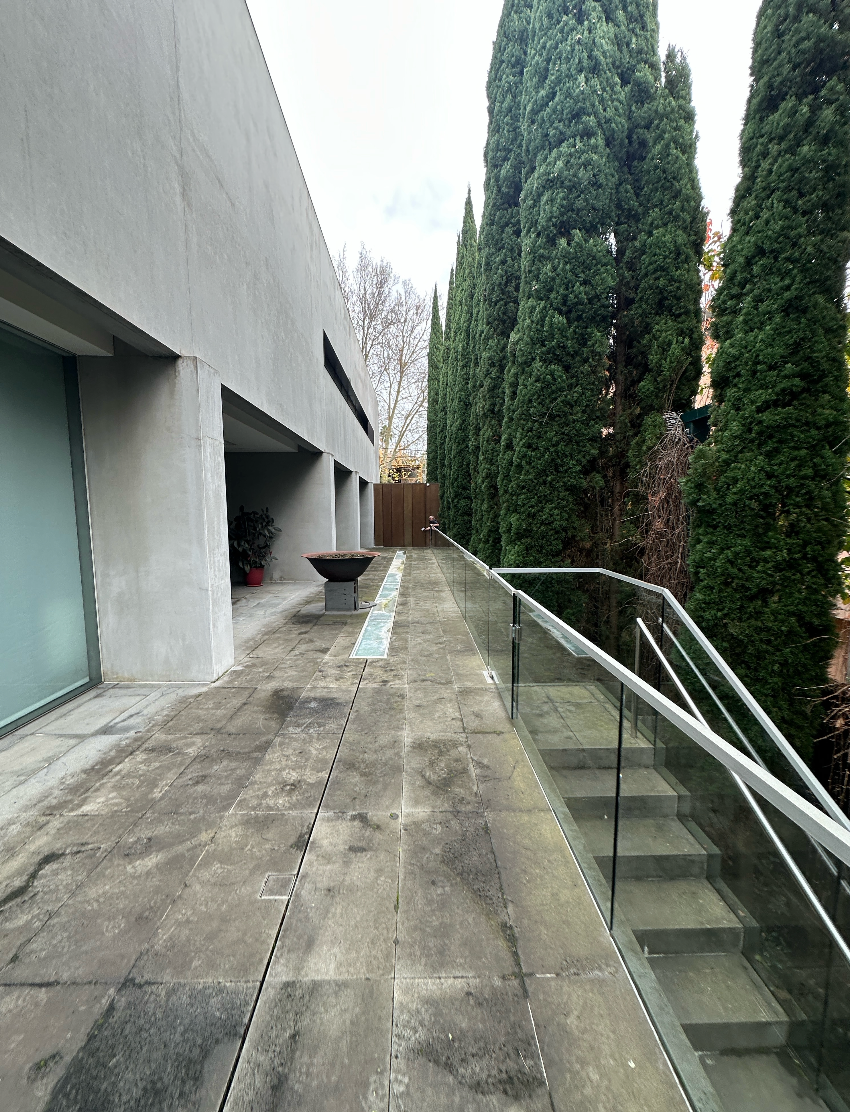
That last one is the one to respect in Melbourne. Italian cypress and other conifer screens are everywhere on inner-suburb boundaries, and a row of them running the length of a frontage, like the gardens we look after around Toorak, is a common sight. They are also the least forgiving to get wrong. Cut them lightly and often, stay in the green growth, and never scalp them back to bare timber expecting the gaps to fill in, because they will not.
When a hedge needs access gear, not a ladder
Once a hedge grows past comfortable head height, a ladder stops being either safe or accurate, and this is the part most guides skip.
There are two problems with working a tall hedge off a ladder. The first is safety. You are standing on soft, often uneven ground, leaning a ladder against a springy hedge that cannot take the weight, and working a running hedge trimmer at full stretch. The second is finish. You simply cannot hold a straight line reaching sideways from a ladder, so tall hedges cut this way end up wavy, scalloped, or thin along the top.
The answer on a genuinely tall hedge is a stable base at height. An elevated work platform or scaffold lets a crew work along the hedge at a consistent level, keep the top dead flat, and hold the faces true from one end to the other. On a long, tall run, that is the whole difference between a crisp line and a patchy one.
This shows up most on the hedges Melbourne's inner suburbs are full of: mature cypress and conifer screens, tall pittosporum and photinia along a boundary, and the formal hedges on premium properties where the finish is the entire point. It is why our hedge service carries proper access equipment for the tallest and densest hedges rather than working off ladders. Reaching a five metre screen safely, and cutting it level from the very top to the base, is as much a gear and crew question as a horticultural one. It is also where three decades of council-grade horticultural experience across Melbourne's gardens, including gardens featured in Paul Bangay's books, earns its keep, because knowing how hard you can push a given species is what stops a big reshape turning into a bare hedge.
Getting the lines right
Timing gets you a healthy hedge. Technique gets you a good-looking one.
- Batter the hedge, meaning cut it slightly wider at the base than the top. It lets light reach the bottom so the hedge stays green all the way down instead of going bare and leggy low. Most hedges cut at home end up top-heavy and thin out at the base over the years.
- Run a string line for anything formal. Freehand is fine for an informal screen, but a formal hedge lives or dies on a straight top.
- Keep the blades sharp and clean. Torn foliage browns at the cut and opens the door to disease, and blunt trimmers bruise more than they cut.
- Clear the clippings out of the hedge, not just off the ground. Clippings left sitting on top hold moisture against the foliage.
Why the timing and frequency are worth getting right
A hedge cut at the wrong time, or left too long between cuts, does not just look untidy. It gets harder and more expensive to bring back. A screen allowed to run away needs a hard reshape that leaves it looking sparse for a season while it recovers. Kept on a regular rhythm, the same hedge holds its shape, stays dense, and never needs the drastic cut in the first place. On a formal garden, that steady rhythm is the quiet work that keeps the whole property looking sharp year round.
Keeping your hedges sharp, all year
If you have got a tall hedge, a formal screen, or you would simply rather have someone keep your hedges on a proper rhythm, that is the work we do across Melbourne. Get in touch for a quote and we will take a look at what your garden needs.
Frequently Asked Questions
When is the best time to trim hedges in Melbourne?
Late winter to early spring is the best time for a hard reshape, because most hedges are close to dormant and cutting just before the spring flush drives thicker regrowth. Follow that with lighter trims through spring, summer and autumn to hold the shape. Thanks to Melbourne's mild climate you can trim most of the year, the main thing to avoid is cutting during a run of extreme heat.
How often should hedges be trimmed?
Most evergreen hedges need two to three trims a year and deciduous hedges about twice, once after each growth flush. Fast growers and formal, crisp hedges need more, often a light trim every six to ten weeks through the growing season, while an informal privacy screen can usually get by on two solid cuts a year.
Can you trim hedges in summer in Melbourne?
Yes, for most of summer. Melbourne rarely holds high heat for long, so light maintenance trims through summer are fine. The exception is a run of 35 to 40 degree days, when fresh cuts can scorch. If a hedge needs a tidy in a hot spell, cut early in the morning and water it afterwards.
When should you not trim a hedge?
Avoid a hard cut during extreme heat, and avoid a heavy reshape late in autumn, which can push out soft growth that the first cold snap then damages. Frost-sensitive plants like box are best not cut in winter, and you should never cut conifers or cypress back into old bare wood, as most will not reshoot from it.
Do tall hedges need special equipment to trim?
Once a hedge is above head height, a ladder becomes both unsafe and inaccurate. A stable elevated platform or scaffold lets a crew reach the hedge safely and cut a straight, level line the whole way along, which is difficult to achieve reaching sideways from a ladder. Tall cypress, conifer and formal screens are the usual cases where proper access gear makes the real difference.