
Garden Maintenance in Toorak: A Local Specialist's Approach

28 April 2026

Toorak gardens are some of the most distinctive in Melbourne. Heritage homes, mature trees, formal hedging, and meticulously planned planting beds set them apart from anything else in the city. They're also some of the most demanding to maintain properly.

Looking after a Toorak garden isn't the same as looking after a standard suburban backyard. The plant selections are often rare or established, the design is usually intentional, and the upkeep needs to preserve a level of finish that took years to achieve. One bad prune, the wrong fertiliser, or a missed irrigation issue can set things back significantly.

At Consolidated Horticultural Services, we've been maintaining premium gardens across Toorak and Melbourne's inner suburbs since 1995. Our founder Alistair Bethke spent seven years with the City of Melbourne's Parks and Gardens division before starting CHS, and the team has gone on to maintain gardens featured in Paul Bangay's books — many of them right here in Toorak.

This article covers what proper garden maintenance in Toorak actually involves, what makes these gardens different to maintain, and what to look for when choosing a gardener for a Toorak property.


What Makes Toorak Gardens Different


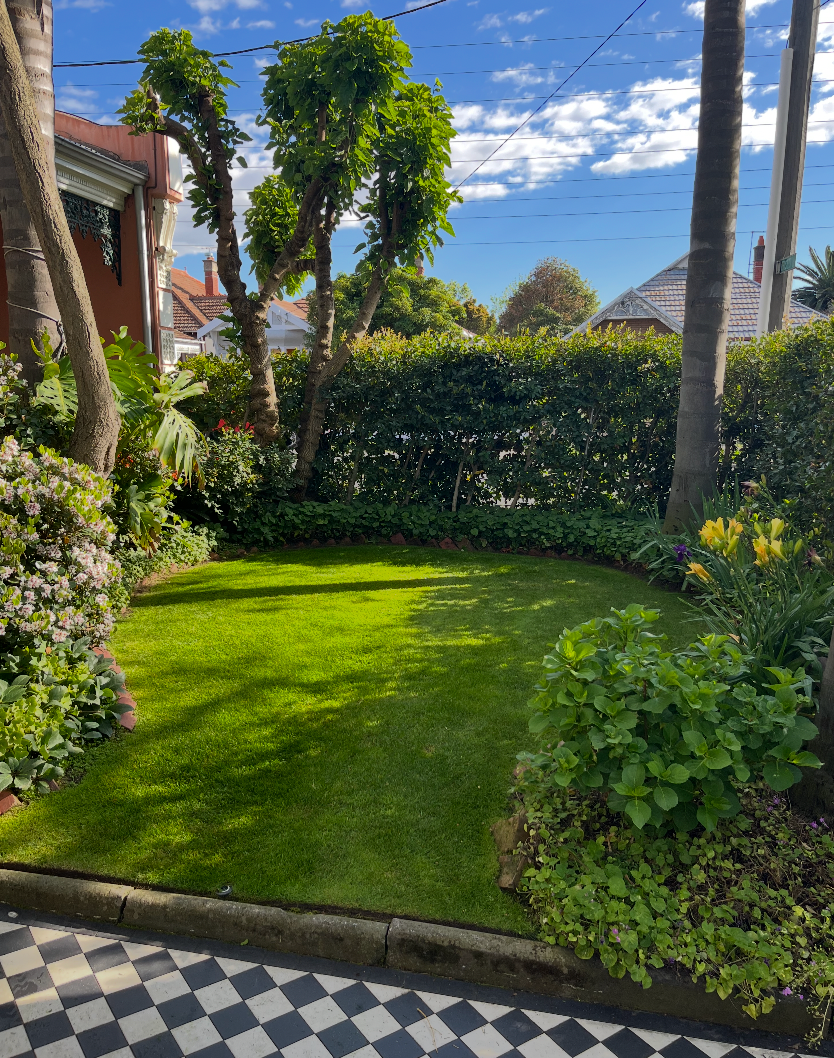
Drive through Toorak and the gardens are immediately recognisable. There's a consistent design language — formal hedging, structured planting, mature trees, established lawns, and often water features or stonework. Many of these gardens have been built over decades and represent a serious horticultural investment.

A few things set Toorak gardens apart from standard residential maintenance:

Mature plantings. Many properties feature trees and hedges that are fifty, eighty, or even over a hundred years old. These plants need a different approach than younger material — careful pruning to preserve structure, soil management to keep them healthy long-term, and an understanding of how they respond to seasonal stress.

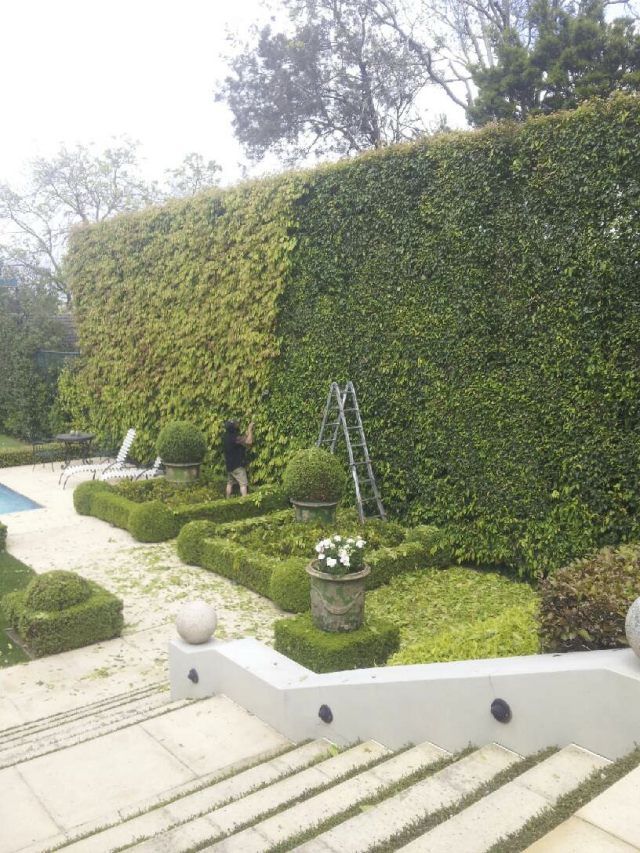
Formal design. Box hedging, pleached trees, topiary, and structured planting beds are common. Maintaining these properly requires a steady hand and a clear understanding of how each plant responds to trimming. A box hedge cut at the wrong height or wrong time of year can take a full season to recover.

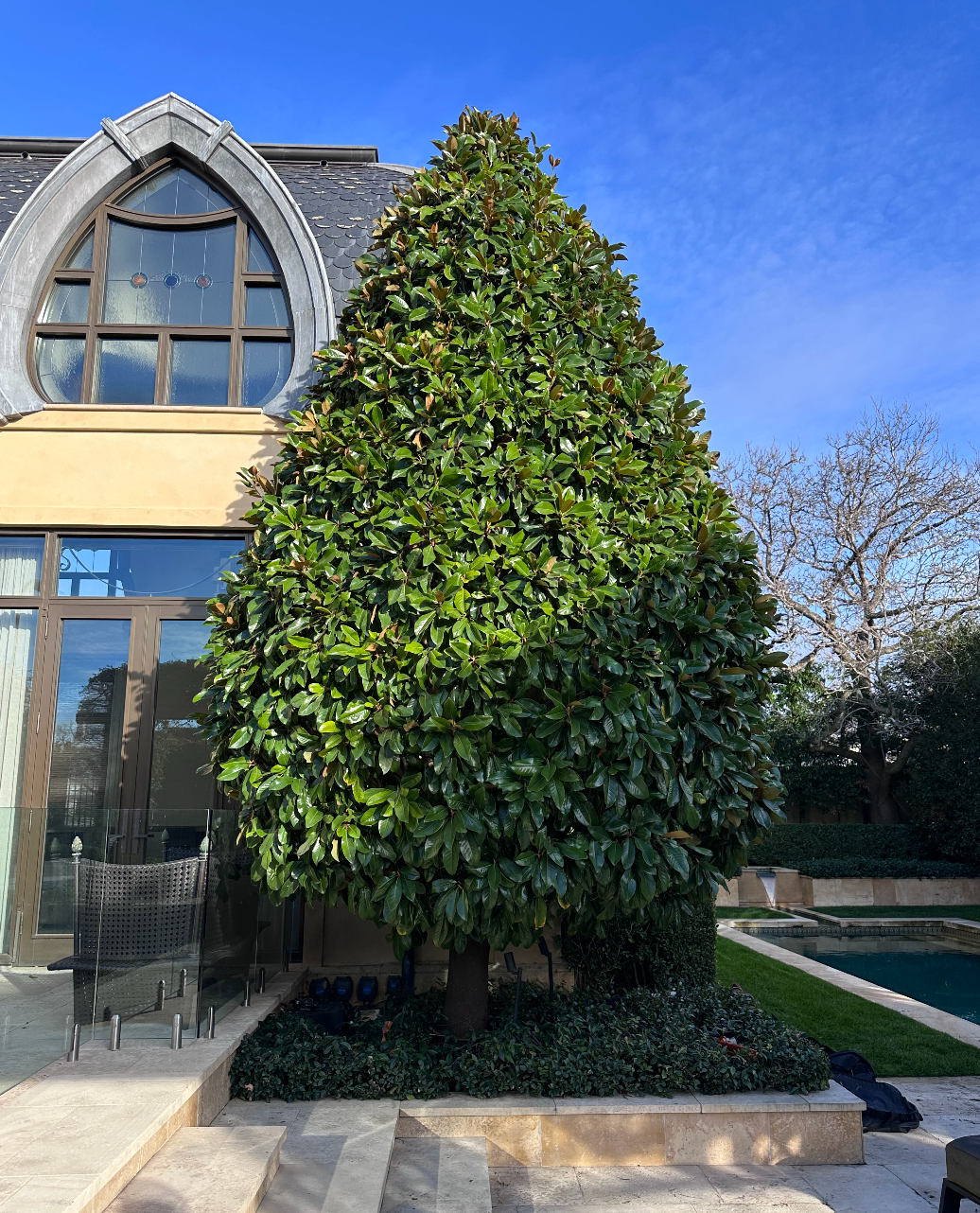
Heritage trees. Toorak has some of Melbourne's best examples of mature deciduous trees — magnolias, plane trees, oaks, and maples. These need attention from gardeners who understand canopy management, not just someone with a chainsaw.

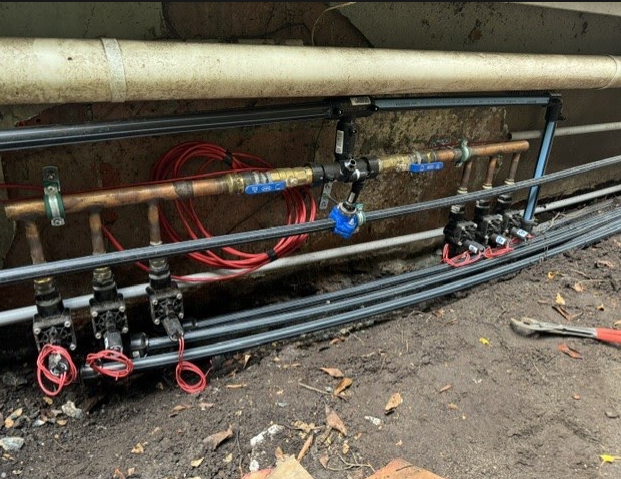
Irrigation systems. Many Toorak gardens run multi-zone automatic irrigation, often integrated with rainwater tanks, pump systems, and complex valve manifolds. When something fails, knowing how to diagnose and repair it without tearing up the garden is a specialist skill.

Visibility. These are properties where the garden is part of the home's identity. Owners notice when a hedge is uneven, when grass has gone patchy, or when a feature plant looks stressed. The standard of finish has to be consistent.


What Garden Maintenance in Toorak Actually Involves


Good ongoing maintenance for a Toorak garden goes well beyond mowing and edging. Here's what a thorough service looks like across the year.


Lawn Care

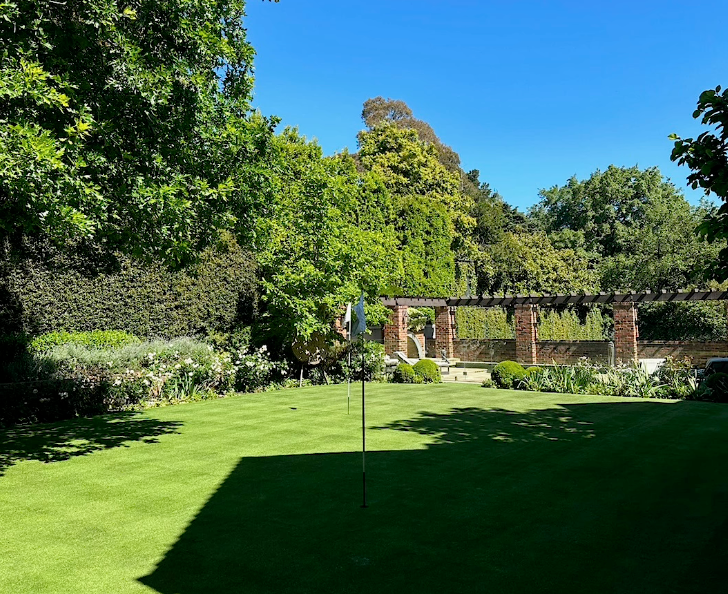
Most Toorak lawns are couch, kikuyu, or buffalo, and many feature striped finishes that need a cylinder mower or careful rotary mowing to maintain. Beyond mowing, proper lawn care includes seasonal fertilising, aeration to relieve compaction, top-dressing where needed, and weed management. We monitor for common issues like couch mites, lawn grubs, and fungal disease so they can be treated before they spread.


Hedge Trimming and Topiary

Toorak is hedge country. Box, photinia, viburnum, lilly pilly, and pittosporum hedges are everywhere, and each species needs a slightly different approach. Generally, formal hedges benefit from two to three trims a year — once in early spring to set the shape, once mid-summer to keep growth controlled, and a final tidy heading into autumn. Pleached trees and topiary need more frequent attention to maintain their geometry.


Pruning and Plant Health

Roses, ornamental trees, climbers, and feature shrubs all have specific pruning windows. We schedule pruning work into the annual maintenance calendar so plants are cut back at the right time of year, not whenever the team happens to be on site. We also actively monitor for pest and disease pressure — scale, aphids, mildew, citrus leaf miner, and the various fungal issues that turn up in Melbourne's climate.


Irrigation Management

A Toorak garden without functioning irrigation usually looks tired by January. Our team is fully licensed in irrigation installation and repair, which means we can spot a leaking valve, a blocked dripper line, or a controller issue and fix it on the spot rather than calling in a separate contractor. Seasonal adjustments to run times and watering frequency keep the system running efficiently year-round.


Mulching, Fertilising, and Soil Health

Most Toorak gardens benefit from an annual mulch top-up in spring and targeted fertilising tailored to the plant material. We use organic mulches that break down to feed the soil over time, and we adjust fertiliser programs based on soil conditions and what's actually growing.


Seasonal Clean-Ups

Autumn leaves, spring cleanups after winter dieback, and end-of-summer tidies are part of the rhythm. These visits handle the heavier work — clearing beds, lifting and dividing perennials, replacing tired annuals, and preparing the garden for the next season.


Pots, Urns, and Container Plantings

Toorak loves a well-styled pot. Whether it's standard tree roses flanking an entry, urns of seasonal colour, or feature pots with sculptural plants, container plantings need their own watering, feeding, and replanting schedule. We handle pot installs and seasonal swap-outs as part of regular maintenance.


Why Local Experience in Toorak Actually Matters

Plenty of gardeners service Toorak. Far fewer have spent decades working specifically on the kinds of gardens you find there.

The difference shows up in the small things. Knowing that a particular street has clay-heavy soil that needs gypsum every few years. Recognising the sourcing of a specific hedge variety because you've seen it across three other gardens in the same postcode. Having an established relationship with the irrigation system on the property because you installed it ten years ago. Knowing which arborist to call when a heritage tree needs work, because you've worked alongside them on similar projects.

This kind of local knowledge can't be faked. It builds up over years, and it's the reason CHS has clients we've maintained continuously for over two decades.

It also matters because Toorak gardens often connect to larger ecosystems — pool surrounds, paved courtyards, driveways, retaining walls, and complex drainage. A gardener who only handles soft landscaping leaves gaps. CHS handles earthworks, paving, irrigation, turf construction, and hardscape repair in-house, so a single team can address everything that comes up over the life of the garden.


What to Look for in a Toorak Gardener

If you're choosing a maintenance provider for a Toorak property, a few things are worth checking before you commit:

Experience with similar gardens. Ask to see examples of other Toorak or inner-suburb properties they currently maintain. Ongoing relationships are a stronger signal than one-off projects.

Horticultural qualifications and team structure. A team led by qualified horticulturists will spot plant health issues earlier and treat them more effectively. Ask who'll actually be on your property each visit.

Insurance and licensing. Garden maintenance on a Toorak property often involves working at height, using machinery, and handling chemicals. Full insurance, irrigation licensing, and chemical handling certification matter.

Capacity to handle larger work. Heritage trees come down. Irrigation systems fail. Drainage issues emerge. A maintenance provider who can scale up when needed (or who has the right relationships in place) saves you the stress of project-managing multiple contractors.

A reliable service rhythm. Toorak gardens look their best when they're cared for on a consistent schedule. Look for a provider who can commit to regular weekly or fortnightly visits and who shows up when they say they will.


Working with CHS

We've been maintaining Toorak gardens for thirty years. Our team operates across the inner suburbs daily, with established service runs that mean efficient scheduling, consistent crews, and the ability to respond quickly when something needs attention between visits.

A typical CHS maintenance program for a Toorak property might include:

  • Weekly or fortnightly visits during the growing season, monthly through winter
  • Lawn care, hedge trimming, pruning, weeding, and bed maintenance
  • Seasonal fertilising and pest monitoring
  • Irrigation servicing and adjustments
  • Mulching and soil management
  • Annual plant health review with replacement recommendations where needed
  • Coordination with arborists, landscape designers, or other contractors as required

We work with private homeowners directly, with property managers, and alongside landscape designers and architects on premium projects across Melbourne.

If you'd like to talk about ongoing garden maintenance for a Toorak property, get in touch. We're happy to visit, walk through what your garden needs, and put together a maintenance plan that fits.


Get a free quote →

Or call Alistair directly on 0417 336 426.
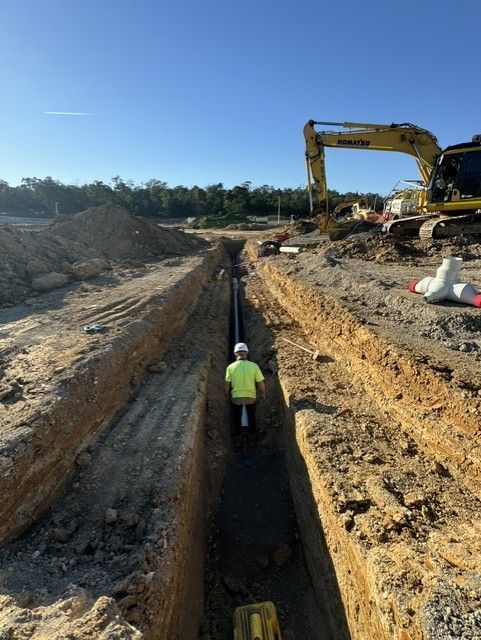
Construction trench with large black underground tank sections being installed, workers and machinery visible.
8 June 2026
A 20,000 litre water tank is a big piece of kit. Sitting on the surface, it would dominate a backyard or eat into usable space on a commercial site. Put it underground, and the same capacity disappears beneath your feet. Once the backfill goes over the top and the ground is reinstated, you would never know it was there. That is the quiet appeal of underground water storage, and it is a job we are being asked about more often across Melbourne. Homeowners investing in established gardens want a reserve to draw on through summer. Commercial and civil sites need storage that does not compromise the surface area they have allocated to other uses. In both cases, going below ground solves the space problem. What it does not do is make the job simpler. If anything, an underground tank asks more of the groundwork than a surface one ever would. Here is what actually goes into installing a tank like this, and why the part you cannot see is the part that matters most. Why put a water tank underground at all The obvious answer is space, and for a lot of properties that is the whole story. A tank holding 20,000 litres is not small. Above ground it needs a footprint, clearance around it, and usually a screen or some landscaping to stop it becoming the first thing you see. On a tight inner-Melbourne block, or a site where every square metre is already spoken for, that is space most people would rather use for something else. Underground storage removes that trade-off. The capacity is identical. The difference is that it sits beneath a lawn, a driveway, a garden bed, or a paved area, doing its job out of sight. For residential properties where the garden is the point, that means no bulky tank interrupting the design. For commercial and civil sites, it means surface area stays available for buildings, hardstand, parking, or landscaping. There is a second reason that matters in Melbourne specifically. Water security has become a genuine consideration rather than an afterthought. A buried reserve of this size gives a property a real buffer, whether that water is captured rainfall feeding an irrigation system or a held reserve for a larger landscape. Through a long, dry Australian summer, 20,000 litres goes a long way. What 20,000 litres actually gets you It helps to put the number in context. Twenty thousand litres is enough to make a meaningful difference to how a property manages water, not just a token gesture. For an established garden running an irrigation system, that volume can carry the watering load through stretches of dry weather without leaning on mains supply. For a larger landscape, or a commercial site with planting to maintain, it provides a reserve that buys flexibility when restrictions tighten or rainfall does not arrive on schedule. Sizing a tank is its own decision, and it depends on what the water is feeding, how much roof or catchment area is available to fill it, and what the property is trying to achieve. A tank that is too small empties before it is useful. One that is too large for its catchment never fills. Twenty thousand litres tends to suit properties with a real garden or landscape to support and the catchment to keep it topped up, which is exactly the kind of work that sits across both garden and civil sites. The groundwork is the real job This is the part people underestimate. The tank is the visible product, but the install lives or dies on what happens in the ground before the tank ever arrives. It starts with the excavation. A pit for a tank this size has to be cut accurately, shaped to suit the tank, and dug to the right depth. Get the dimensions wrong and you are either fighting to fit the tank or backfilling a gap that should never have been there. This is where accurate machine work earns its keep. A clean, correctly shaped excavation sets up everything that follows. Then comes the base. An underground tank needs to sit on a properly prepared and compacted foundation. The base has to carry the weight of a full tank, stay stable over time, and give the tank an even surface to rest on. Skip the preparation, or compact it poorly, and the tank can settle unevenly once it is full and loaded. That is the kind of problem that does not show up on install day. It shows up years later, and by then it is expensive to fix. With the base right, the tank is lowered into position and levelled. Levelling is not a nicety. A tank sitting off level puts uneven load on its structure and affects how it performs over its life. Only once the tank is sitting true and stable do connections get made and backfill begin. The backfill itself has to be done carefully and evenly around the tank so it is supported on all sides rather than pushed out of position. None of this is visible in the finished job. That is rather the point. A good underground tank install is one nobody ever thinks about again. Where civil earthworks meets water systems A job like this sits in an interesting spot. It is not purely earthworks, and it is not purely a water or irrigation job. It needs both, on the same site, working together. The excavation, the base preparation, the levelling, and the backfill are civil earthmoving and earthworks work. That is the discipline that makes sure the hole is right, the foundation is sound, and the tank is set properly. The other half is understanding what the tank is for and how it connects into the wider system, which is where irrigation and water systems experience comes in. A tank is only as useful as the system drawing from it, so the storage and the supply need to be planned as one. Bringing both capabilities to a single site is not something every operator can do. Plenty of landscaping outfits handle planting and maintenance. Plenty of civil contractors handle bulk earthworks. The work that combines accurate excavation with an understanding of how water moves around a property is a narrower field, and it is the kind of integrated job CHS has built decades of experience around. Underground storage and Melbourne's climate Melbourne's weather makes a strong case for on-site water storage. The city swings between wet stretches that fill catchments quickly and long dry runs that put established gardens under pressure. A property that captures water when it is plentiful and holds it for when it is not is far better placed than one relying on mains supply and hoping for rain. For anyone investing in a serious garden, an irrigation system, or a water-wise landscape, storage is the piece that ties it together. It supports more sustainable irrigation, reduces reliance on town water, and helps a property stay green through the months when it matters most. Pairing storage with a well-designed irrigation setup means the water captured in winter is still working for the garden in February. This is the same thinking behind a lot of the landscape construction and garden work happening across Melbourne right now. Water is no longer an afterthought bolted on at the end. It is being designed in from the start, and underground storage is often the most practical way to hold a meaningful reserve without giving up the space above it. Residential and commercial both benefit On a residential property, the driver is usually the garden. An owner who has put money and thought into established planting wants the security of a reserve and the convenience of irrigation that is not at the mercy of restrictions. Underground storage delivers that without the tank becoming a feature nobody asked for. On commercial, civil, and growth corridor sites, the considerations are different but the logic is the same. Storage might be there for landscape irrigation, for site water management, or as part of a broader civil works package. The surface stays free for its intended use, and the storage does its job underneath. These are the kinds of larger sites where the earthworks side of the job is substantial in its own right, and where having one team handle both the excavation and the water side keeps the project moving. A few things worth thinking about before you install If underground water storage is on your radar, a handful of questions are worth working through early. What is the water for? Irrigation, general garden use, a held reserve, or site water management. The answer shapes the size and how it connects in. How much catchment do you have to fill it? A tank only earns its place if it actually fills. Roof area and other catchment determine whether 20,000 litres is the right number or whether you want more or less. What is the access like? Getting machinery in to dig a pit this size, and getting the tank itself onto the property and into position, needs space and planning. On a tight site this is part of the job that has to be sorted before anything starts. What is going over the top? A tank under a lawn is a different proposition to one under a driveway or paved area that will carry load. That affects how the install is detailed. Working through these up front is the difference between a tank that quietly does its job for decades and one that becomes a headache. Most of it comes down to planning and getting the groundwork right, which is exactly where experience pays off. The takeaway An underground 20,000 litre water tank is one of those jobs where the finished result is deliberately invisible. The value is not in the tank you can point to. It is in the capacity sitting quietly beneath the surface, the space you got to keep above it, and the groundwork that means you will not have to think about it again. For Melbourne properties weighing up water storage, whether for an established garden, a new landscape, or a commercial site, going underground is often the smartest way to hold a serious reserve. The catch is that it asks for proper earthworks and a real understanding of how the water fits into the bigger picture. Done well, you get all the capacity and none of the compromise. If you are thinking about water storage for your property or project, get in touch with CHS and we can talk through what is involved. You can also see more of our earthworks and landscape projects to get a sense of the work.
1 June 2026
A pattern that looks effortless when it's right, and obviously wrong when it isn't
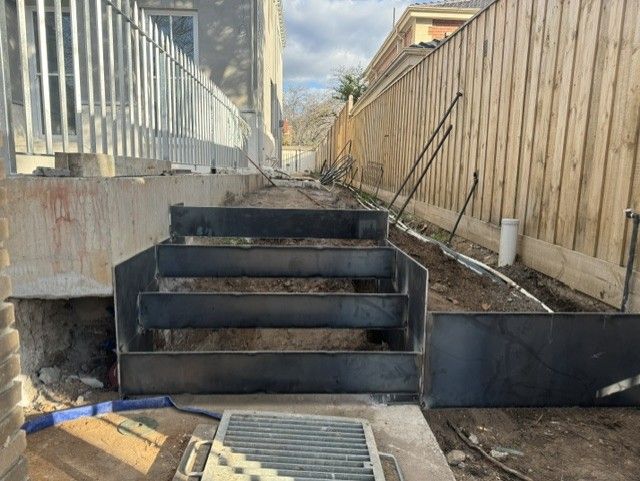
Concrete foundation under construction in a narrow brick alley, with wooden formwork and exposed rebar.
25 May 2026
Understand the vital role of sub base preparation in paving projects. Contact us for expert garden maintenance & landscaping solutions!