
The Best Fast Growing Screening Plants in Australia: A Melbourne Guide

By
Alistair Bethke, Founder
30+ years in Melbourne horticulture and civil works
Key takeaways
- The best fast growing screening plants in Australia for Melbourne gardens include lilly pilly, sweet viburnum, pittosporum, photinia and Leighton green cypress.
- The fastest plant is not always the best choice, because the quickest growers usually need the most trimming to stay neat.
- Match the plant to the width you have, the height you need and how much sun the boundary gets before you think about speed.
- Regular light trimming from the first year is what turns a row of young plants into a dense, solid privacy hedge.
- Some conifers will not regrow from bare wood, so a cypress screen needs consistent trimming from the start rather than a hard cut later.
A new neighbour's second storey, a busy street or a gap in an old hedge can make a garden feel exposed overnight. Most people want the same thing: privacy, and quickly. That is why fast growing screening plants are one of the most common questions we hear from Melbourne homeowners.
The good news is there are plenty of reliable options. The catch is that speed comes with trade-offs. This guide covers the best fast growing screening plants for Melbourne conditions, what each one is good at, and how to choose and care for a screen so it stays dense and tidy for years.
What to consider before choosing a screening plant
Before picking a plant on growth rate alone, it pays to look at the space it has to fill. A plant that suits the site will outperform a faster one that is fighting its conditions.
- Width available: narrow side boundaries need slim, upright plants. Wide boundaries can take bushier screens.
- Height needed: blocking a fence line is a different job to blocking a second-storey window.
- Sun and shade: a south-facing boundary in the shadow of a fence suits different plants to a hot, west-facing one.
- Roots and services: keep vigorous plants with strong roots away from pipes, paving and foundations.
- Maintenance: the faster a plant grows, the more often it will need trimming to keep its shape.
- Look: formal clipped hedge or softer, natural screen. Some plants suit one style much better than the other.
The best fast growing screening plants for Melbourne gardens
Lilly pilly
Lilly pilly is one of the most popular screening plants in Australia, and for good reason. It is native, grows quickly, has dense glossy foliage and takes clipping well, so it works as both a formal hedge and a looser screen. Some older varieties are prone to psyllid, an insect that causes pimply, distorted new leaves. Newer selections bred for psyllid resistance are the safer choice for a long-term hedge.
Sweet viburnum
Sweet viburnum (Viburnum odoratissimum) is a strong performer for tall screens. It grows quickly, has large, glossy leaves that block views well, and copes with both sun and part shade. It needs a bit more width than slimmer options, so it suits wider boundaries best.
Pittosporum
Pittosporum is a go-to for tight spaces. Upright varieties stay narrow, grow quickly and give a fine-textured, tidy screen that looks good clipped or left a little softer. It is a common pick for side boundaries where there is not much room between fence and house.
Photinia
Photinia is loved for its bright red new growth, which flushes after every trim. It grows fast and makes a solid screen. The main drawback is that it can be prone to leaf spot, a fungal problem that tends to show up in damp, humid conditions or where air flow is poor.
Leighton green cypress
If pure speed is the goal, Leighton green is one of the fastest screening plants around. It also grows very tall if left alone, so it needs a commitment to regular trimming. Like many conifers, it does not regrow well from bare wood. Cut back too hard and it can be left with brown, bare patches that never fill in, so it has to be kept in shape from early on.
Murraya
Murraya is a classic for formal hedging, with glossy leaves and fragrant white flowers. It is not the fastest grower on this list, but it is reliable and dense once established. It prefers a sheltered position and can struggle in cold, exposed or frosty spots.
Clumping bamboo
Clumping bamboo gives fast, upright screening in a narrow footprint and suits contemporary gardens. Always choose a clumping type, not a running type, which can spread aggressively into neighbouring gardens and is very hard to remove.
Westringia
For lower screens along paths, front fences or garden beds, westringia is a tough native option. It handles dry conditions and wind, clips neatly and works well as a low to medium hedge rather than a tall privacy screen.
Pleached trees
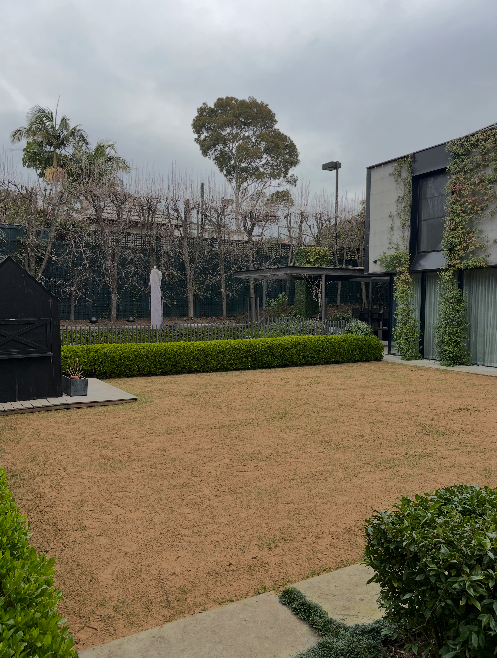
Pleached trees are trained on a frame so their canopies join into a raised screen, often called a hedge on stilts. They are ideal where you need privacy above fence height but want to keep space at ground level. Deciduous choices give summer shade and screening while letting winter sun through.
Best privacy plants for Melbourne by situation
- Narrow side boundaries: upright pittosporum, clumping bamboo.
- Tall screens on wide boundaries: sweet viburnum, lilly pilly.
- Fastest possible coverage: Leighton green cypress, if you are ready to trim it regularly.
- Formal clipped hedges: lilly pilly, murraya, pittosporum.
- Privacy above the fence with space below: pleached trees.
- Low screens and borders: westringia.
How to get a screen established quickly
Choosing the right plant is half the job. How it is planted and looked after in the first couple of years decides how fast it actually fills in.
- Prepare the soil well: improving the soil along the whole planting line gives roots an easy start.
- Get the spacing right: follow the recommended spacing for the variety. Planting too close leads to competition, and too far apart leaves gaps.
- Water through the first summer: deep, regular watering while roots establish is the single biggest factor in early growth.
- Mulch: a layer of mulch holds moisture and keeps weeds from competing.
- Trim early and lightly: tipping the plants from the first year encourages branching low down, which is what makes a hedge dense rather than leggy.
Keeping fast growing hedges in shape
Fast growing hedges in Melbourne need regular attention, especially through spring and summer when growth is strongest. Trimming little and often keeps a screen dense and stops it getting too tall or wide to manage. Letting a hedge go for a year or two and then cutting it back hard often leaves it thin and patchy, and with conifers the damage can be permanent.
A slightly wider base than top also helps, as it lets light reach the lower branches so the hedge stays full right to the ground. For timing and frequency by plant type, see our guide to the best time to trim hedges in Melbourne.
How CHS approaches it
CHS has looked after Melbourne gardens for more than 30 years, and screening and boundary hedges are a big part of that work. Our hedge trimming and pruning service covers everything from formal box and murraya hedges to tall screens, including renovating hedges that have become overgrown or patchy.
Tall hedges are trimmed with access equipment to keep tops level and faces straight, and all green waste is taken away on the day. Because some plants, particularly conifers, will not regrow from bare wood, the team will tell you upfront whether an old hedge can be brought back or is better replaced. For ongoing care, hedge trimming can also be rolled into regular garden maintenance, and if you are planning a new screen as part of a bigger garden change, our landscape design team can help.
Get the right screen for your garden
The best screening plant is the one that suits your space, your aspect and how much maintenance you are happy to take on. Get that right and a fast growing screen will give you privacy for years. If you would like advice on an existing hedge or a new screen, get in touch with the CHS team to book a free site visit and quote.
Frequently asked questions
What is the fastest growing screening plant in Australia?
Leighton green cypress is one of the fastest, with lilly pilly, sweet viburnum, photinia and upright pittosporum also growing quickly. The fastest growers need the most regular trimming to stay neat.
What is the best screening plant for a narrow space?
Upright pittosporum and clumping bamboo are good choices for narrow side boundaries, as they grow tall without taking up much width. Pleached trees also work where ground space is limited.
Which screening plants handle shade in Melbourne?
Sweet viburnum copes well with part shade, and lilly pilly also tolerates it. Most screening plants grow slower and less densely in heavy shade, so expect a little longer to reach full cover.
How often should a fast growing hedge be trimmed?
It depends on the plant, but most fast growers need trimming several times a year during the growing season. Light, regular trims keep the hedge dense and much easier to manage than occasional hard cuts.
Can an overgrown screening hedge be saved?
Many broadleaf hedges like lilly pilly and viburnum can be renovated with a staged hard prune. Conifers such as Leighton green often won't regrow from bare wood, so they may need replacing instead.